
Planning a campervan trip across Poland and wondering where to actually go? You have the vehicle, you have the time, but the sheer size of this country makes it hard to know where to start. Poland has over 3,000 lakes, two mountain ranges, 500 kilometres of Baltic coastline, and forests that cover nearly a third of the entire country. That is a lot to choose from. In this guide, you will discover the 20 most beautiful places for a campervan trip in Poland, organized by region, with honest notes on road conditions, wild camping rules, and what makes each spot worth the drive. Whether you are planning a long weekend escape or a full month on the road, these destinations will give you a real route to follow.

Why Poland Is Perfect for a Campervan Road Trip
Poland does not get the same campervan attention as Norway or Croatia, and that is exactly the point. The roads are emptier, the campsites less crowded, and the landscapes genuinely varied. You can wake up next to a Mazury lake on Monday, drive through old-growth Białowieża forest on Wednesday, and park above a Bieszczady valley by Friday, all without crossing a single border.
A campervan road trip in Poland is also surprisingly affordable. Wild camping in non-protected areas is tolerated in many regions, and even official campsites rarely exceed 80–120 PLN per night. Combined with wynajem kampera terenowego starting from 400 PLN per day, a two-week trip in a fully equipped off-road camper works out far cheaper than most people expect.
But here is the thing Poland rewards most: going off the main road. National parks, forest tracks, and gravel paths leading to hidden bays all open up when you have a vehicle that can actually handle them. That is where a kamper terenowy like the MAN TGE 3.140 with pneumatic suspension makes the difference between a postcard trip and a real adventure.
- Over 3,000 lakes, mostly in Mazury and Pomorze
- Two mountain ranges: Tatry and Bieszczady
- 500+ km of Baltic coastline including shifting sand dunes
- Białowieża, the last primeval forest in Central Europe
- Wild camping tolerated in most non-protected forest areas
Mazury — Poland's Lake District
Mazury is the obvious starting point for any campervan trip in Poland, and the obvious choice is usually obvious for a reason. The Great Masurian Lakes region covers roughly 3,000 square kilometres and contains 2,000 interconnected lakes linked by rivers and canals. It is genuinely beautiful in a way that photographs cannot fully capture.
Best Spots in Mazury for a Campervan
- Lake Śniardwy — Poland's largest lake, with quiet forest access roads on the southern shore
- Ryn and Lake Ryńskie — medieval town, castle, and calm water with easy parking access
- Krutynia River Valley — a kayak route with forested banks ideal for overnight camping
- Mikołajki area — busy in summer but surrounding forest tracks offer quieter options
- Pisz Forest — old pine forest with unmarked gravel tracks suitable for a FWD camper with AT tires
The roads in Mazury vary. Main routes are paved and fast, but the best spots require gravel tracks through Pisz Forest or around the eastern lakes. A standard campervan often struggles here. With ARB Tred Pro recovery boards and proper ground clearance, you reach places that most tourists never see.
Key information: Mazury is most beautiful in early June and late August, when crowds thin but temperatures stay comfortable. July is peak season and campsites fill fast.
Bieszczady — Wild Mountains of the Southeast
If Mazury is Poland's postcard, Bieszczady is its secret. This southeastern mountain range borders Ukraine and Slovakia and has some of the lowest population density in the entire country. Villages abandoned after World War II were never rebuilt, leaving vast stretches of open grassland and forest completely untouched.
Top Bieszczady Destinations for Campervans
- Bieszczady National Park border — park itself prohibits camping, but surrounding areas offer stunning views
- San River Valley — wide river valley with gravel beaches and forest access
- Ustrzyki Górne area — the highest village in Bieszczady, access road tests any vehicle
- Solina Reservoir — 27 km long artificial lake surrounded by hills, several legal camping spots
- Cisna village — classic Bieszczady base, access to forest tracks heading into the hills
Bieszczady is the region where a kamper z oponami AT (napęd przedni) off road pays for itself completely. Many of the best viewpoints and river spots require driving unpaved forest roads for 10–20 kilometres. The Truma D6E diesel heater becomes non-negotiable here too, because Bieszczady nights drop to near zero even in August.
This is also one of the few regions in Poland where you can genuinely say you are far from everything. No mobile signal in places, no shops for 30 kilometres, no other campervans in sight. The Starlink Mini on board means you are not actually cut off from the world, doing 50–200 Mbps in the middle of a mountain valley, but it certainly feels like you are.

The Baltic Coast — Dunes, Cliffs and Empty Beaches
Poland's Baltic coast stretches from Świnoujście in the west to the Hel Peninsula in the east, and it is far more varied than most visitors expect. Sandy beaches give way to dramatic cliffs at Kołobrzeg and Jastrzębia Góra, while Słowiński National Park contains the largest moving sand dunes in Europe. Yes, actual desert dunes, on the Baltic Sea.
Coastal Highlights for a Campervan Trip in Poland
- Słowiński National Park (Łeba area) — moving dunes up to 30 metres high, access to the coast from designated parking
- Hel Peninsula — 35 km narrow sandbar with sea on both sides, best visited outside July and August
- Kołobrzeg cliffs — dramatic coastline, good network of campsites along the cliff top
- Wolin Island — forested island with Wolin National Park, bison population, and sea access
- Darłowo area — quieter stretch of coast with good wild camping options in forest behind the dunes
The coast is ideal for a kamper na weekend or short trip because distances are manageable and the scenery changes quickly. Drive 50 kilometres west of Gdańsk and you are in completely different landscape. The Dometic FreshLight 1400 air conditioning earns its place during July heat waves when coastal campsites get genuinely hot.
Wild camping on the dunes or beach itself is prohibited in protected areas, but forest strips behind the coast often allow overnight stops. The 405Ah LiFePO4 battery system means you run the fridge, charge devices, and run fans for 2–3 full days without needing shore power or a generator.
Tatry and Podhale — The High Mountain Option
The Tatry are the highest mountains in Poland, and Zakopane is the most visited mountain town in the country. For campervans, the Tatry require some planning because access to the park itself is heavily restricted and parking in Zakopane during summer is genuinely chaotic. But the surrounding Podhale plateau and the valleys north of the main range offer excellent campervan territory.
- Dolina Chochołowska — longest valley in Polish Tatry, campervan parking at the valley entrance
- Pieniny National Park — just east of Tatry, dramatic gorge landscape, far fewer crowds
- Orawa region — traditional wooden architecture, plateau roads, views toward Slovakia
- Czorsztyn Reservoir — artificial lake between Pieniny and Gorce mountains, several good stops
The Tatry are non-negotiable for any podróż kamperem po Polsce that aims to cover all of the country's landscapes. The drive from Mazury to Zakopane takes about 7 hours straight, which makes it perfect for a two-week trip combining north and south.
Roztocze and Eastern Poland — The Forgotten Wilderness
Most foreign visitors and a surprising number of Polish travellers skip eastern Poland entirely. That is a significant mistake. Roztocze National Park sits on a limestone plateau between Zamość and the Ukrainian border, with chalk rocks, clear rivers, and horse herds that actually roam wild. It looks nothing like anywhere else in Poland.
Eastern Poland Destinations Worth the Drive
- Roztocze National Park — limestone formations, wild Konik horses, quiet forest roads
- Zamość — UNESCO listed Renaissance city, excellent base for eastern exploration
- Polesie National Park — marshland and bog ecosystem, boardwalk trails, almost no tourists
- Bug River valley — natural border river with Ukraine and Belarus, wide floodplains and sandy beaches
- Wigry National Park (Suwałki region) — clear lake, historic monastery on a peninsula, excellent for off-season visits
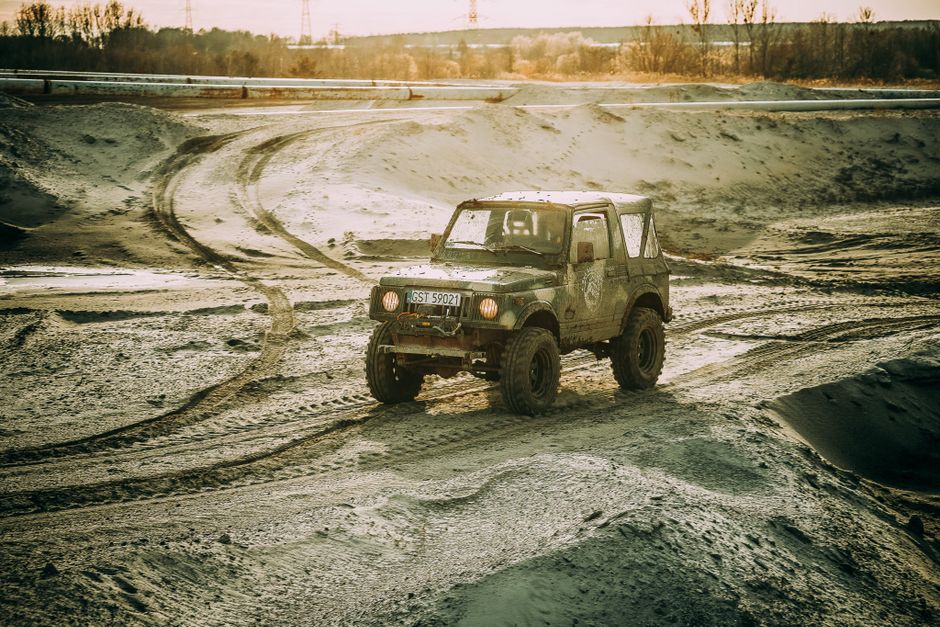
Eastern Poland rewards those who drive a proper kamper off road. Roads are often unpaved for the last few kilometres to the best spots, and forest tracks in Polesie can be genuinely muddy after rain. This is exactly the territory where the MAN TGE with its reinforced undercarriage and recovery gear earns respect.
Key information: Eastern Poland has excellent mobile coverage on main roads but signal drops significantly off-road. The Starlink Mini (50–200 Mbps, ping under 50ms) is the practical solution for anyone working remotely on the road or simply wanting reliable navigation in these areas.
Forests and Off-Road Terrain — Where a FWD camper with AT tires Earns Its Keep
Poland has approximately 9.4 million hectares of forest, covering 31% of the country. A significant portion of that forest is accessible on unmarked gravel tracks, forest service roads, and seasonal paths that most vehicles cannot handle. For a kamper z oponami AT (napęd przedni), this opens up overnight spots that no campsite guide will ever list.
Best Forest Regions for Off-Road Campervan Driving
- Białowieża Primeval Forest — the last old-growth forest in Central Europe, bison visible from roadside, strict access rules apply in the national park core zone
- Bory Tucholskie — vast pine forest in Pomerania with hundreds of kilometres of gravel tracks and lakes hidden inside
- Knyszyn Forest (Podlasie) — old forest near Białystok, excellent lynx and wolf territory
- Augustów Forest — connects to Lithuania, deep forest with canoe routes and hidden lakes
Driving forest tracks in Poland requires knowing the rules. State forests (Lasy Państwowe) are generally open for driving unless signed otherwise, but overnight stops are only permitted in designated forest campsites (leśne miejsca biwakowania). There are several hundred of these across Poland, most of them free or nearly free, and many are genuinely beautiful.
The Hella Luminato LED lighting on the Intrak roll cage turns dark forest tracks into navigable paths at night, and the GPS ABC Track system means your position is always known. These are not marketing features. They are practical tools for exactly this kind of driving.
For anyone considering a wynajem kampera na miesiąc or longer, forest regions of eastern and northern Poland offer enough variety to spend weeks without repeating the same landscape twice. Combine Białowieża, Augustów, Suwalszczyzna, and Mazury into a single northern loop and you have one of the best road trip circuits in the country.
Frequently Asked Questions
Is wild camping legal in Poland?
Wild camping in Poland is a grey area rather than a clear yes or no. State-owned forests allow overnight stops in designated forest bivouac sites (leśne miejsca biwakowania), which are free and scattered throughout the country. Camping outside these designated spots in state forests is technically prohibited but widely tolerated in practice if you leave no trace. National parks have stricter rules and camping outside official sites is not permitted. Always check local regulations for each specific area before setting up for the night.
How much does it cost to rent a campervan in Poland?
A kamper wynajem cena in Poland varies significantly based on vehicle type and season. Basic campervans start around 300–350 PLN per day, while a fully equipped off-road camper like the MAN TGE 3.140 from Nomad Camper starts from 400 PLN per day in low season and 600 PLN per day in high season. That price includes Starlink internet, full solar energy system, and all camping equipment. For a wynajem kampera na tydzień, contact the rental directly for multi-day pricing options.
What is the best time of year for a campervan trip in Poland?
Late May through June and September are the best months for a kamper na wakacje in Poland. The weather is warm, crowds are manageable, and campsites have availability. July and August are peak season with higher prices and busier spots, particularly in Mazury and on the Baltic coast. For Bieszczady and eastern forests, September is often the single best month, with golden light, zero crowds, and stable weather. Winter campervan travel is possible with proper heating equipment (the Truma D6E diesel heater handles temperatures well below zero) but requires careful planning.
Do I need a FWD camper with AT tires for Poland?
You do not need a 4x4 for a standard Poland trip, but it opens up a completely different category of destinations. Gravel forest roads, river valley access tracks, and some mountain approach roads are much easier in a vehicle with proper ground clearance and off-road capability. If you plan to explore Bieszczady valleys, eastern forests, or coastal dune tracks, a kamper z oponami AT (napęd przedni) off road is a significant practical advantage rather than just a luxury choice.
Plan Your Route and Book Your Camper
Poland has more to offer campervan travellers than most people realise. Twenty destinations barely scratches the surface of what this country contains, from Mazury lakes in the north to Bieszczady peaks in the southeast, from Baltic dunes to primeval forest in the east. The common thread is that the best spots require either leaving the main road or having equipment good enough to make remote stays genuinely comfortable.
Three key things to remember: plan your route around regions rather than individual spots, check wild camping rules for each protected area before you arrive, and make sure your vehicle can actually handle what Poland's best locations demand. A standard campervan gets you to the campsite. A proper off-road camper gets you to the lake nobody else finds.
Nomad Camper offers wynajem kampera terenowego from Szczecinek in western Pomerania, with Starlink internet included, full off-grid energy for 2–3 days, and all the equipment you need for any of the 20 destinations in this guide. Pick-up is straightforward, the vehicle is fully briefed, and the route planning support is part of the service. Reserve your campervan online and start building your Poland route today.
Find spots on the campervan map
All campsites, camper parkings and dump stations mentioned in this article are available on our interactive campervan map of Poland and Europe — 1,000+ verified spots with addresses, ratings and one-tap navigation. Filter by region, category or search by name.