
Winter Camping in Poland with a Campervan: The Real Story
Most people pack away their camping dreams the moment October arrives. But winter camping in Poland is not only possible — for the right kind of traveler, it is honestly one of the most rewarding experiences you can have on four wheels. Snow-covered Bieszczady trails, frozen Mazury lakes at sunrise, empty campsites with no noise but wind through pine trees. This guide covers everything you need to know before booking a campervan for winter in Poland: what temperatures you will actually face, how heating systems hold up, what autonomous energy looks like when there is no sun for three days, and exactly what it costs per night. By the end, you will know whether a winter campervan trip in Poland makes sense for you, what gear matters most, and which destinations are worth the cold.
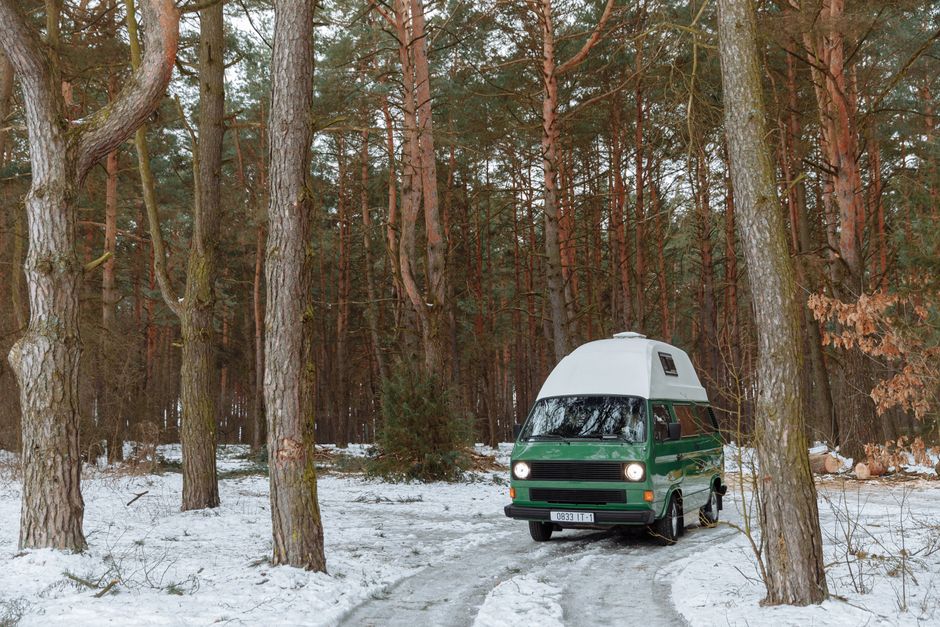
What Winter in Poland Actually Looks Like for Van Life
Poland in winter is not one thing. It is a country of real regional contrasts, and that matters a lot when you are planning where to park overnight in a campervan.
In the Bieszczady mountains, temperatures regularly drop to -15°C in January and February. Snow cover is reliable from December through March. In the Mazury lake district, expect -5°C to -10°C at night, with crisp, clear days that make the frozen landscape look almost unreal. Along the Baltic coast near Kołobrzeg or Ustka, winters are milder, often staying around 0°C to -5°C, with strong sea winds that make wind chill the real challenge.
- Bieszczady: -10°C to -18°C at night, heavy snowfall, forest roads may require 4WD or all-terrain tires
- Mazury: -5°C to -12°C, frozen lakes, very low tourist traffic after November
- Baltic coast: 0°C to -6°C, strong gusts, dramatic empty beaches in winter light
- Tatry and Pieniny: extreme cold at altitude, but stunning views if your van can handle mountain roads
The key point is this: Polish winters are real winters. Not mild drizzle. Proper sub-zero nights, black ice on rural roads, and occasional blizzards in the mountains. That is exactly what makes a well-equipped campervan the right tool. You are not tent camping in the frost. You have a heated, insulated living space that you drive wherever you want.
Key information: Poland has over 300 officially designated places for overnight campervan parking (miejsca postojowe), many of which remain accessible in winter, even if full campsite services are closed.
Heating Systems That Make or Break a Winter Trip
This is the single most important factor in winter campervan travel. Everything else is secondary. If your heating fails at -12°C at night, the trip is over. So before you choose a vehicle, ask one question: what heating system does it have, and how does it run?
The Nomad Camper MAN TGE 3.140 runs two separate systems. The Truma D6E diesel heater with a built-in hot water boiler keeps the interior warm even at extreme outdoor temperatures without touching your gas supply. It draws diesel from the vehicle's own tank, which means you never worry about running out of heating fuel separately. In parallel, the Dometic FreshLight 1400 provides both active heating and cooling, running on 230V power drawn from the onboard battery bank.
How the Heating Setup Performs Below Zero
- Truma D6E: rated for temperatures down to -25°C, maintains interior at 20°C with minimal fuel consumption
- Dometic FreshLight 1400: heat pump mode works efficiently down to around -5°C outdoor temperature
- Combined: you get redundancy. If one system needs maintenance, the other keeps you warm
- Hot water: the Truma boiler gives you a warm shower even at -15°C outside
One thing many people underestimate: ventilation in winter. The Maxxfan bathroom ventilator prevents condensation buildup, which is a serious problem in cold-weather van life. Cooking, breathing, and wet gear all produce moisture. Without proper airflow, your walls and ceiling collect ice on cold nights. The Maxxfan runs continuously at low speed, solving this passively.
And the insulation itself matters. The MAN TGE body is fully insulated with spray foam and thermal barriers, with poplar plywood interior cladding that holds heat well. You will notice the difference compared to a standard conversion van within the first cold night.

Energy Autonomy: How Off-Grid Power Works in Winter
Here is the honest challenge with winter off-grid camping: solar panels produce a fraction of their summer output. In December in Poland, you might get 2 to 3 usable hours of sun at a low angle. A 500W array might produce 200–300Wh on a clear winter day. That is real, and you should plan around it.
The Nomad Camper system is built specifically for this reality. The 405Ah LiFePO4 Energoblock battery bank, paired with a Victron MultiPlus-II 3000W inverter/charger and Victron MPPT solar controller, gives you genuine autonomy. At normal winter consumption (heating fan, lights, Starlink, laptop charging, fridge), the system runs for 2 to 3 full days without any solar input at all.
Winter Energy Consumption Breakdown
- Truma D6E diesel heater fan: low draw, runs on 12V, roughly 3–8W continuous
- Dometic RC10.4T 70L fridge: around 30–40Wh per day in cold weather (less work needed)
- Starlink Mini: 15–25W continuous when active
- Laptop + phone charging: 60–100Wh per day depending on usage
- LED lighting throughout: minimal, under 10W total
In practice, the fridge actually consumes less energy in winter because the ambient temperature assists cooling. The heating fuel (diesel) comes from the vehicle tank, not the battery. So your electrical load in winter is often lower than in summer. The 405Ah bank handles this comfortably, and when you drive even for an hour, the alternator tops up the system via the Victron charger.
The solar panels (305W fixed roof + 2x200W Volt portable) still contribute on clear winter days. Park south-facing, unfold the portable panels, and you recover meaningful charge even in January.
Best Winter Destinations in Poland by Campervan
Choosing where to go in winter changes the experience completely. Some areas are genuinely spectacular in snow. Others become inaccessible without proper ground clearance and tires.
The MAN TGE 3.140 has all-terrain capability, pneumatic suspension, and ARB Tred Pro recovery boards on board. This opens destinations that a standard camper simply cannot reach in winter conditions.
Top Winter Campervan Routes in Poland
- Bieszczady Loop: Ustrzyki Dolne to Cisna to Lesko. Empty villages, wolves in the forest, no other tourists. Roads are plowed on main routes, but you will want that ground clearance on forest tracks.
- Mazury in January: Park by a frozen lake outside Mikołajki or Giżycko. Watch ice fishermen. Total silence. Most campsite infrastructure is closed, but free parking spots are accessible.
- Pieniny and Gorce: Snow on the peaks, thermal pools at Krościenko nad Dunajcem nearby. A good base for day hikes before returning to a warm campervan.
- Baltic coast off-season: Łeba, Słowiński National Park, Hel Peninsula. Dramatic winter light over the sea, empty dunes, no summer crowds.
Winter travel in Poland rewards flexibility. You are not booking campsite slots weeks ahead. You park, you wake up, you move if you want. That freedom is part of the point.
Real Costs: What Does a Winter Campervan Trip in Poland Cost?
Let's put real numbers to this. People often assume winter means discounts, and in some cases that is true. But a properly equipped campervan that can actually handle Polish winters is not cheap to run or rent, and understanding the full cost picture helps you plan.
Rental Cost
Nomad Camper charges from 400 PLN per night in the low season (500 PLN in the shoulder seasons), with high-season pricing reaching 600 PLN per night. Winter rates apply from November through March. For a 7-night winter trip, budget approximately 2,800 PLN for the campervan rental itself. A refundable deposit of 5,000 PLN is required and returned within 3 business days after the trip.
Additional Daily Costs on the Road
- Diesel: MAN TGE averages 9–11L/100km. At current Polish fuel prices (~6.50 PLN/L), roughly 58–72 PLN per 100km driven
- Overnight parking: many free wild camping spots in winter; paid campsites with winter service cost 40–80 PLN/night
- Food and cooking: the onboard Solgaz gas stove and 70L fridge support full self-catering, saving significantly versus restaurants
- Starlink internet: included in the rental price. No extra cost for 50–200 Mbps connectivity
- Heating fuel: Truma D6E draws from the vehicle diesel tank, so no separate cost
A realistic 7-day winter campervan trip in Poland for two people, driving 800–1,000km total, comes to roughly 5,500–7,000 PLN all-in including the rental, fuel, food, and occasional paid parking. That compares favorably to hotels and car rental for the same period, especially when you factor in the flexibility and experience.
Staying Connected: Internet and Work in Winter Conditions
For remote workers, winter in a campervan raises one practical question: does the internet actually work in the mountains and forests of Poland in January?
The answer with Starlink Mini is yes. The system maintains 50–200 Mbps with ping under 50ms in locations where mobile networks often fail entirely. Bieszczady is notorious for poor LTE coverage. Starlink does not care about local cell tower density. It connects directly to low-orbit satellites regardless of where you park.
The Victron energy system keeps the Starlink running through multi-day overcast periods. You have a fixed desk inside, a Lagun folding table for laptop work, and 230V outlets powered by the 3000W Victron MultiPlus-II inverter. The Dometic climate system keeps the interior at a comfortable working temperature regardless of outdoor conditions.
In practice, several Nomad Camper clients have run full remote work weeks from the Bieszczady in winter. Video calls, file uploads, cloud syncing. It works as reliably as a city apartment, but with a very different view out the window.
You can check the full campervan specification and availability to see exactly what the onboard setup includes before booking.
Safety and Preparation for Winter Campervan Travel
Winter travel requires more preparation than summer. Not dramatically more, but specifically more. Here is what actually matters.
Before You Leave
- Check tire conditions: the MAN TGE comes with all-season or winter tires depending on rental period. Confirm this at pickup in Szczecinek
- Test the heating systems before your first overnight stop in a remote location
- Pack layered clothing even though the van is heated. You leave the van, and Poland in January is cold
- Download offline maps (Maps.me or OsmAnd) for Bieszczady and mountain areas where data coverage drops
On the Road
- ARB Tred Pro recovery boards are onboard. Learn how to use them before you need them
- The GPS ABC Track system allows the rental team to assist you remotely if needed
- Intrak roof rack with Hella Luminato LED lighting makes evening arrivals at dark forest parking spots safe and practical
- Never park on a slope without chocking the wheels in icy conditions
- Keep the diesel tank above half in winter. Fuel gelling is rare with premium diesel in Poland, but running low in a remote area in a blizzard is a bad situation
The Nomad Camper team is reachable at +48 666 607 545 and info@nomadcamper.pl throughout your trip. For questions about route planning for winter conditions, they can advise based on current weather and road reports.
Frequently Asked Questions
Is winter camping in Poland safe in a campervan?
Yes, with the right vehicle and preparation. A well-insulated campervan with a diesel heater like the Truma D6E is significantly safer and more comfortable than tent camping in winter. The main risks, road conditions and vehicle recovery in snow, are addressed by all-terrain capability and onboard ARB Tred Pro boards. Always check weather forecasts and road conditions before heading into mountain areas.
Do campsites in Poland stay open in winter?
Most traditional campsite infrastructure closes between October and April. However, many free overnight parking areas (places marked for campervans) remain accessible year-round. In winter, you also have more freedom to park in forest areas without disturbing anyone. Some campsites in Mazury and the Bieszczady run winter-season operations for snowshoeing and skiing visitors.
How does Starlink perform in cold weather and mountain areas?
Starlink Mini is rated for operation down to -30°C and performs reliably in mountain conditions across Poland. The antenna has a built-in heater that prevents ice buildup. In the Bieszczady and Mazury, where mobile LTE is weak or absent, Starlink provides consistent 50–200 Mbps speeds. Cold weather does not reduce performance compared to summer use.
What is the minimum temperature the campervan can handle overnight?
The Truma D6E diesel heater is rated for outdoor temperatures down to -25°C. Combined with the full spray foam insulation in the MAN TGE body, interior temperatures remain comfortable at 18–21°C regardless of outdoor conditions. The system has been tested in Bieszczady winter nights where temperatures dropped below -15°C without any heating issues.
Conclusion: Winter in Poland Is Waiting for You
Winter camping in Poland with a properly equipped campervan is not a compromise. It is a genuinely different kind of travel. You get empty roads, dramatic landscapes, no booking queues, lower costs, and the kind of solitude that is impossible to find in July. The Bieszczady covered in snow, a frozen lake at dawn in Mazury, the Baltic coast in January light. These are not consolation prizes for traveling off-season. They are the point.
The practical barriers, heating, energy, internet, road conditions, are solved by the right vehicle. The Nomad Camper MAN TGE handles all of it: 2 to 3 days of autonomous power from 405Ah LiFePO4 batteries, reliable diesel heating down to -25°C, Starlink internet in the middle of a Bieszczady forest, and the ground clearance to get there in the first place.
If you are ready to try Polish winter from the inside of a warm, connected, off-grid campervan, the next step is simple. Check availability and book your winter campervan trip in Poland today. Pickup is in Szczecinek, and the road opens from there.