
Why Norway Fjords and a Campervan Are a Perfect Match
Kamper Norwegia fiordy — three words that describe one of the most rewarding road trips you can do in Europe. Picture waking up with your van parked at the edge of a glassy fjord, no campsite reception, no neighbors, just water so still it mirrors the mountains above. That is wild camping in Norway, and it is legal, free, and genuinely spectacular.
Norway's "allemannsretten" — the right to roam — lets you park and sleep almost anywhere in nature for up to two nights. Combined with a fully self-sufficient campervan, this freedom turns a standard holiday into something closer to an expedition. No booking headaches. No checking out by 10 AM. Just you, the road, and roughly 1,200 kilometres of coastline carved into the land by ancient glaciers.
From this article you will learn which routes to drive, where to legally wild camp, what gear makes the difference between comfort and misery, and how Nomad Camper's off-grid setup handles Norway's demanding conditions.
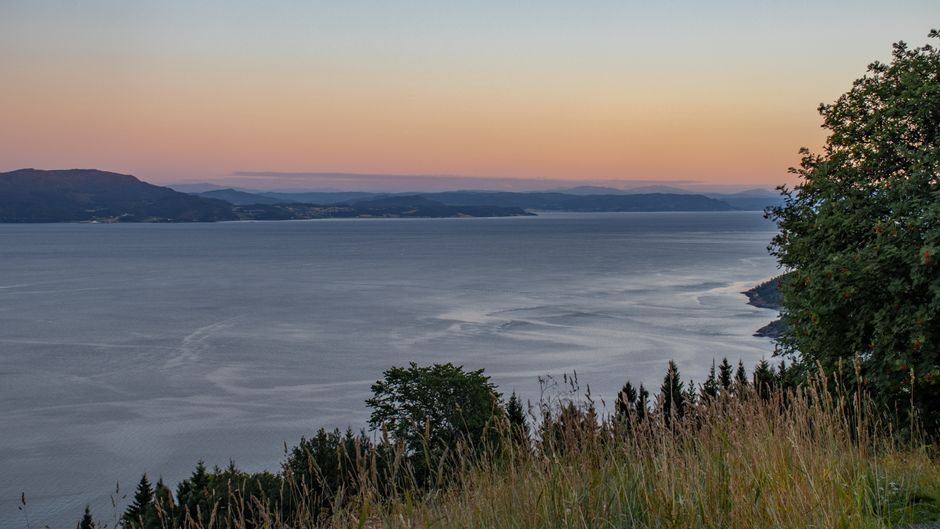
The Best Campervan Routes Through Norway's Fjords
Norway has dozens of scenic routes worth driving, but three stand out for campervan travellers who want the full kamper Norwegia fiordy experience without spending every day on a ferry queue.
Route 1: The Classic Western Fjords Loop (Bergen to Ålesund)
Start in Bergen, drive northeast along the Hardangerfjord, then cross into the Sognefjord — the longest fjord in Norway at 204 kilometres. The Naeroyfjord branch near Gudvangen is a UNESCO World Heritage site and on calm mornings looks completely unreal. From there, head north on Fv55 over the Sognefjellet mountain road (open roughly June to October) toward Lom, then west again to Geiranger and Ålesund. Budget 10 to 14 days for this loop.
Key stops on this route:
- Vøringsfossen waterfall near Eidfjord — park overnight at the top, wake up above the clouds
- Flåm valley floor — arrive before 9 AM to avoid cruise ship crowds
- Dalsnibba viewpoint above Geirangerfjord — 1,500 metres elevation, snow even in July
- Trollstigen mountain road — 11 hairpin bends, maximum 12.4 metre vehicle length
Route 2: Lofoten Islands Circuit
Drive north past Trondheim to Bodø, take the ferry to Moskenes, then drive the E10 the full length of the Lofoten archipelago. The scenery here is almost violent in its beauty. Jagged peaks drop straight into Arctic sea. Fishing villages painted in red and yellow cling to rocks. And because Lofoten sits above the Arctic Circle, you get midnight sun from late May through mid-July, meaning you can drive, hike, and photograph at 2 AM in full daylight. Plan 7 to 10 days for the islands alone.
Route 3: Ryfylke and Lysefjord (Stavanger Region)
Less crowded than Geiranger and just as dramatic. Drive the Ryfylke scenic route from Stavanger east to Preikestolen (Pulpit Rock) trailhead, then continue to Kjerag above the Lysefjord. This southern region is driveable year-round, making it the best choice for shoulder-season trips in April, May, or September.
Understanding Norway Wild Camping Rules
Wild camping in Norway is protected by law, not just tolerated. The allemannsretten gives everyone the right to camp on uncultivated land. For campervan travellers, the key rules are straightforward.
Key information: You can park and sleep on uncultivated land for up to two consecutive nights without asking permission. After two nights, move at least 150 metres or ask the landowner.
Practical rules to follow:
- Stay at least 150 metres from the nearest inhabited house or cabin
- Leave no trace — take all rubbish with you
- Do not light open fires between 15 April and 15 September in most areas
- Some popular areas like Preikestolen and Geiranger have local restrictions — check current signage
- Respect agricultural land, cultivated fields, and enclosed gardens
- Grey water must go into proper waste stations, not onto the ground
Wild camping spots near fjords are rarely hard to find. A layby with a view, a gravel track ending at a river, a forest clearing above a valley — Norway has thousands of them. Apps like Park4Night, Freecampsites.net, and iOverlander all have Norway-specific data contributed by the overlanding community.
But wild camping only works well when your van is genuinely self-sufficient. If you need hookup power every night, you are not actually wild camping — you are just staying at a campsite without the amenities.

Off-Grid Power and Connectivity on a Norway Road Trip
Norway's weather is unpredictable. You might get three days of sun followed by four days of cloud and rain. This is exactly why energy autonomy matters more here than almost anywhere else in Europe.
Nomad Camper's MAN TGE 3.140 carries a 405Ah LiFePO4 Energoblock battery bank, 500W of solar (305W fixed panel plus two 200W Volt panels that can be repositioned), and a Victron MultiPlus-II 3000W inverter-charger with MPPT controller. In practical terms, this means two to three full days of autonomous operation with zero sun. In Norwegian summer, even overcast skies produce enough diffuse light to keep the battery above 60 percent on a normal usage day.
What does normal usage look like? Running the Dometic FreshLight 1400 air conditioning unit for two to three hours in the evening, keeping the Dometic RC10.4T 70L fridge at 4°C around the clock, charging laptops and cameras, and using the Starlink Mini internet antenna.
Internet in Norwegian Fjords: Starlink Changes Everything
Norwegian mobile coverage is actually reasonable along major routes, but the moment you park in a remote fjord valley or on the Lofoten coast, local SIM cards drop to one bar or nothing. Starlink Mini solves this. The antenna connects to low-Earth-orbit satellites, delivering 50 to 200 Mbps download speeds with a ping below 50ms — even when parked in a valley with no cell signal for 30 kilometres in any direction.
This is why remote workers increasingly choose campervan trips over city hotels. You can take a video call with a Geirangerfjord waterfall behind you, upload a 4K video from a Lofoten beach, and still check in with the office — all without hunting for a café with Wi-Fi. Starlink Mini is included in every Nomad Camper rental at no extra cost.
Driving a Campervan in Norway: What You Need to Know
Norway is genuinely easy to drive — roads are well-maintained, drivers are calm, and signage is clear. But campervans add a few complications worth knowing before you arrive.
Ferries Are Part of the Route
Many fjord crossings require a car ferry. Most run frequently (every 30 to 60 minutes), accept payment by card onboard, and cost between 150 and 400 NOK for a vehicle plus passengers depending on length. Factor ferry costs into your budget — a two-week western fjords trip might involve 10 to 15 ferry crossings.
Road Restrictions
- Many mountain roads have vehicle length limits, typically 10 to 12.4 metres
- Some roads close entirely for campervans over 3.5 tonnes — always check Statens Vegvesen road restrictions before a detour
- Toll roads (bomveier) are charged electronically — most rental companies register vehicles with AutoPASS, confirm this before renting
- Speed limits are strict: 80 km/h on rural roads, 50 in towns, cameras everywhere
Fuel and LPG
Petrol stations appear every 50 to 80 kilometres on main routes, less frequently on islands and mountain roads. Fill up whenever you drop below half a tank. LPG availability is limited in Norway — Nomad Camper's Solgaz gas setup uses standard camping gas canisters, which are available at most larger petrol stations and outdoor shops like XXL.
Essential Gear for a Fjord Campervan Trip
Norway punishes under-prepared travellers. Temperatures can drop to near freezing in July above 1,000 metres elevation. Rain arrives without warning. Mosquitoes in some fjord valleys are serious. Here is what actually makes a difference.
Clothing and Footwear
- Waterproof hiking boots — not trail runners, actual waterproof boots for muddy fjord trails
- Merino wool base layers — regulate temperature better than synthetic on multi-day hikes
- A proper waterproof shell jacket, not a light windbreaker
- Midlayer fleece for cold evenings even in peak summer
Campervan-Specific Gear
If you are renting Nomad Camper, much of this is already onboard. But if you are sourcing your own vehicle, these are non-negotiable for Norway:
- Recovery boards like ARB Tred Pro — soft ground near fjord shores can surprise you
- Diesel parking heater such as Truma D6E — temperatures drop fast at altitude
- Roof ventilation fan like Maxxfan — prevents condensation in wet weather
- Lightweight folding chairs and a table — you will spend evenings outside more than you expect
- Mosquito net for the sliding door opening
Key information: Nomad Camper's rental includes ARB Tred Pro recovery tracks, Intrak roof rack with Hella Luminato lighting, pneumatic suspension, and GPS tracking via ABC Track — all the equipment for genuine off-road use near fjord shorelines.

Najczęściej zadawane pytania
Is wild camping with a campervan legal in Norway?
Yes. Norway's allemannsretten (right to roam) permits camping on uncultivated land for up to two nights. Campervans are included as long as you follow the 150-metre distance rule from inhabited buildings, leave no trace, and do not stay beyond two nights in the same spot without moving.
What is the best time of year for a campervan Norway fjords trip?
June, July, and August offer the best combination of weather, open mountain roads, and midnight sun in the north. May and September are quieter with fewer tourists and still perfectly driveable in the south. Winter trips to Norway by campervan require a serious diesel heater, winter tyres, and experience with snow driving.
How much does a Norway campervan road trip cost per day?
Budget roughly 150 to 250 EUR per day covering fuel (Norway diesel is around 18 to 20 NOK per litre), ferry crossings (10 to 30 EUR per crossing), food from supermarkets like Rema 1000 or Kiwi, and optional paid campsites when you want a shower. Wild camping eliminates accommodation costs entirely.
Do I need a FWD campervan with AT tires for Norway?
For standard fjord routes on paved roads, standard AWD or even 2WD is sufficient in summer. But if you plan to explore gravel tracks, park near shorelines, or drive mountain detours that are not on main routes, all-wheel drive and good ground clearance make a real difference. Nomad Camper's MAN TGE 3.140 has permanent AWD and pneumatic suspension adjusted for rough terrain.
Final Thoughts and Next Steps
A kamper Norwegia fiordy road trip is not a holiday you forget. The scale of the landscape, the silence of a fjord at midnight, the fact that you drove there yourself and parked wherever looked good — these are experiences that stay with you. Norway rewards self-sufficient travellers. The more prepared your van, the more remote and extraordinary your spots can be.
Three things to take away from this article. First, wild camping is legal and works brilliantly with a properly equipped campervan. Second, energy autonomy and reliable internet matter more in Norway than almost anywhere else. Third, the western fjords loop, Lofoten circuit, and Ryfylke routes each offer completely different landscapes worth experiencing.
Nomad Camper's MAN TGE is built for exactly this kind of trip. Check the full specifications and availability before planning your dates, because summer slots fill up fast. When you are ready to book your Norwegian adventure, reserve your campervan at nomadcamper.pl/booking and start planning the route that ends at a fjord with no neighbours and a coffee in hand.