
Why Campervan Fuel Costs Catch Most Travelers Off Guard
Campervan fuel costs are the single expense that most first-time renters underestimate. You book the van, pack your gear, plan the route, and then somewhere between Warsaw and the Tatra Mountains your bank app sends a quiet notification that makes you wince. Sound familiar?
It does not have to go that way. With a bit of upfront math and a few smart habits on the road, fuel becomes a predictable line item rather than a budget wrecker. In this article you will learn how diesel consumption actually works in a modern campervan, how to build a realistic fuel budget before you leave home, which routes and driving styles burn the most money, and where Nomad Camper's MAN TGE 3.140 fits into that picture. You will also find practical tips that our customers use to shave 15 to 20 percent off their pump bills without changing their itinerary.
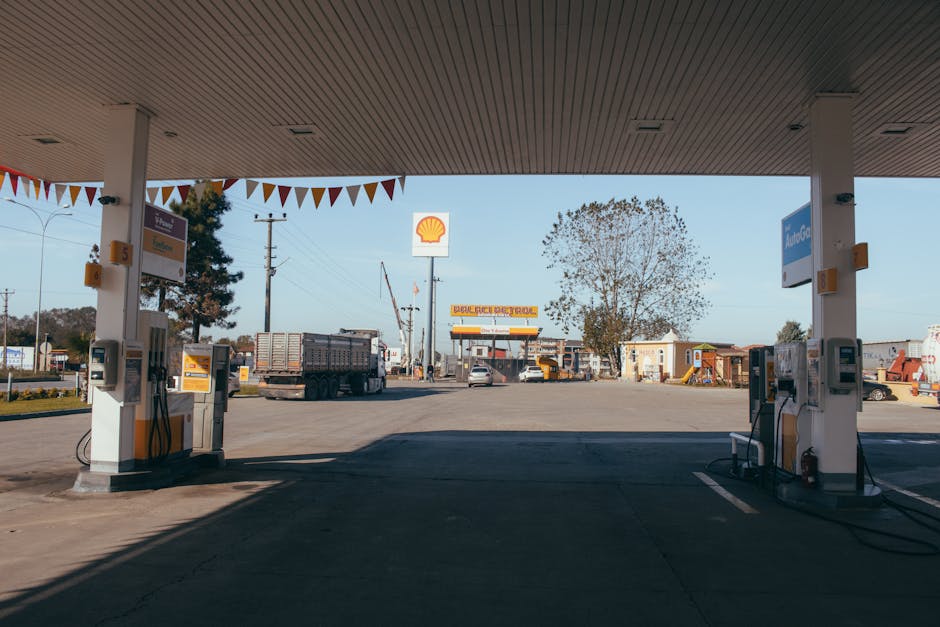
How Much Does a Campervan Actually Consume?
The honest answer is: more than a regular car, less than a truck. A well-maintained diesel campervan in the 3.5-tonne class typically burns between 10 and 14 litres per 100 km on open roads. In mountains or city traffic that number can climb closer to 16 or 18 litres. On a flat motorway at 110 km/h you might get away with 11 litres.
Nomad Camper's MAN TGE 3.140 is based on a 2.0 TDI engine producing 140 hp. In real-world conditions across Poland, the Carpathians and the Baltic coast, our customers report the following averages:
- Flat motorway at 110 km/h: 11.5 to 12.5 L/100 km
- Mixed regional roads at 80 to 90 km/h: 12 to 14 L/100 km
- Mountain passes and off-road tracks: 15 to 18 L/100 km
- Urban driving with stop-and-go traffic: 16 to 20 L/100 km
The tank holds 100 litres, which gives you a comfortable 600 to 700 km range on good roads before you need to stop. That is enough to drive from Szczecinek to Zakopane on a single tank if you keep your speed reasonable and avoid the highest mountain roads on the way.
Key fact: Every 10 km/h above 100 km/h increases diesel consumption by roughly 1.5 litres per 100 km. Driving at 130 km/h instead of 100 km/h can add 150 to 200 PLN to the fuel bill on a 1,000 km trip.
Building a Realistic Fuel Budget Before You Leave
Calculating campervan fuel costs before your trip takes about five minutes and saves you a lot of stress. Here is the formula that actually works:
- Estimate total distance. Map your full route including detours and day trips. Add 15 percent for spontaneous diversions, because everyone takes them.
- Choose a consumption estimate. Use 13 L/100 km as a safe average for mixed driving in Poland and Central Europe. Use 15 L/100 km if your route includes mountains or off-road sections.
- Find current diesel price. Check e-petrol.pl the week before departure. In mid-2026 Polish diesel prices hover around 6.30 to 6.80 PLN per litre depending on the region and station brand.
- Do the math. Distance (km) divided by 100, multiplied by consumption (L/100 km), multiplied by fuel price (PLN/L).
- Add a 10 percent buffer. Prices vary between stations, and your driving will not be perfect every day.
Example Calculation: 7-Day Mazury Loop
A typical week-long Mazury lake district loop from Szczecinek covers roughly 1,400 km including lakeside detours. At 13 L/100 km and 6.50 PLN per litre: 1,400 divided by 100 equals 14, times 13 equals 182 litres, times 6.50 equals 1,183 PLN. Add 10 percent buffer: roughly 1,300 PLN in fuel for the whole trip. Split between two adults that is 650 PLN each, or about 160 euros. Very manageable for a week of off-grid travel.
Example Calculation: 10-Day Bieszczady Adventure
A Bieszczady mountain trip typically covers 2,000 to 2,400 km with forest tracks. Using 15 L/100 km: 2,200 divided by 100 times 15 times 6.50 equals 2,145 PLN. Budget 2,400 PLN to be safe. Still under 600 euros total for a 10-day mountain escape.
Routes That Cost You More, and Why
Not all kilometres are equal. Some roads simply drain your tank faster, and knowing which ones before you depart lets you make informed choices rather than unpleasant discoveries at the pump.
Mountain Roads and Passes
Climbing 1,000 metres of elevation burns roughly the same fuel as driving 50 extra flat kilometres. The Bieszczady, Tatry and Karkonosze routes all involve repeated climbs and descents. Descents recover some energy through engine braking, but the net effect is still a 20 to 30 percent increase in consumption compared to flat terrain.
Off-Road and Gravel Tracks
Soft ground, sand and deep gravel force the engine to work harder even at low speeds. Our customers driving forest roads in Masuria or beach tracks on the Baltic coast consistently report 16 to 19 L/100 km on those segments. Short but costly.
Motorways at High Speed
Polish motorways (A1, A2, A4) tempt you to cruise at 130 km/h. But aerodynamic drag scales with the square of speed, so a campervan at 130 km/h uses roughly 30 percent more fuel than at 100 km/h. If you have time, the expressway at 100 km/h saves real money.
City Centres
Gdańsk, Kraków, Wrocław: beautiful, but brutal for fuel economy. Stop-and-go driving in a 3.5-tonne van can push consumption above 20 L/100 km. Park at the edge of the city and use public transport or bikes for sightseeing. Your fuel budget will thank you.

How Off-Grid Equipment Changes the Fuel Equation
Here is something most fuel calculators ignore: the equipment inside your campervan affects how much you drive to reach comfort. And that has a direct impact on your campervan fuel costs.
Campervans without reliable solar power or battery capacity force you to run the engine for electricity, drive to campsites with hookups, or make detours to charge devices. Every unnecessary 50 km costs roughly 40 PLN in diesel.
The Nomad Camper MAN TGE carries 405Ah LiFePO4 batteries charged by 500W of solar panels (305W fixed plus two 200W portable Volt panels) and managed by a Victron MultiPlus-II 3000W inverter with MPPT. In practice this means:
- 2 to 3 days of full autonomy without any sunlight at all
- Fridge, laptop, lighting, phone charging and fans running all night without engine start
- No detours to campsites just to charge your devices
- No idling the engine for electricity, which burns roughly 1.5 to 2 L/hour
The Truma D6E diesel heater with boiler does draw from the main tank, but it is extremely efficient. Running overnight in winter conditions it uses about 0.5 litres per hour, or roughly 4 litres for a comfortable 8-hour sleep. That is 26 PLN. Compare that to driving to a heated campsite and back.
The Dometic FreshLight 1400 air conditioning unit runs entirely on the LiFePO4 bank during the day when solar is active, adding zero fuel cost in good weather. In overcast summer conditions it may slightly deplete the battery, but the solar recovery is usually complete by midday.
And the Starlink Mini satellite internet included in every rental means you work productively from wherever you park, so you are not burning diesel driving to a cafe with Wi-Fi every morning.
Practical Tips to Reduce Fuel Spend on the Road
You do not need to sacrifice your itinerary to cut fuel costs. Small changes in driving habits and refuelling strategy can realistically save 200 to 400 PLN on a 10-day trip.
- Drive at 90 to 100 km/h on open roads. You arrive 20 to 30 minutes later but save 15 to 25 percent in fuel over a full day's drive.
- Use apps to find cheap stations. Stacja Benzynowa, e-petrol.pl and Google Maps all show current prices. Circle K and Orlen on motorway service areas charge 15 to 30 gr/L more than roadside stations in small towns.
- Fill up in Poland before crossing borders. Diesel in Slovakia, Czech Republic and Austria runs 10 to 20 percent more expensive than in Poland in 2026.
- Keep tyre pressure correct. Under-inflated tyres increase rolling resistance and add 3 to 5 percent to consumption. Check pressure every 3 to 4 days on long trips.
- Anticipate stops. Lifting your foot early and coasting to a stop burns almost no fuel. Hard braking wastes the kinetic energy you already paid for.
- Plan multi-stop days as loops, not lines. Returning to a central camp spot each evening costs less than driving in a straight line and repositioning the van every day.
- Use the engine brake on descents. In a diesel van, fuel consumption drops to near zero when you are in gear and coasting downhill. Never put the van in neutral on mountain descents.
And honestly, the biggest fuel saver is simply staying somewhere beautiful for two nights instead of one. If you find a perfect lake spot in Mazury, you are not burning any diesel while you are parked there enjoying it.
Comparing Fuel Costs Across Popular European Destinations
If you are planning a longer trip beyond Poland, fuel costs change significantly by country. Here is a practical comparison based on 2026 pump prices and a 13 L/100 km consumption rate:
- Poland: 6.30 to 6.80 PLN/L. Most affordable diesel in Central Europe. Fill up before leaving.
- Czech Republic: approximately 7.20 to 7.80 PLN equivalent per litre. Slightly more expensive, worth topping up in Poland.
- Slovakia: similar to Czech Republic, with better prices in small towns than motorway stations.
- Austria: expensive, roughly 8.50 to 9.50 PLN equivalent. Budget accordingly for Alpine routes.
- Germany: varies widely, roughly 7.50 to 8.20 PLN equivalent. Supermarket stations (Aldi, Jet) are cheapest.
- Scandinavia: the most expensive in Europe for diesel. Budget 10 to 13 PLN equivalent per litre in Norway and Sweden.
A 2,000 km loop through the Polish Bieszczady and Slovak highlands costs roughly 1,700 to 2,000 PLN in fuel. The same distance through Austria and southern Germany costs 2,800 to 3,400 PLN. Both are doable. But knowing the difference lets you allocate budget to the experiences that matter more to you, whether that is a nice dinner in Kraków or a rafting trip on the Dunajec river.
Frequently Asked Questions
How much fuel does a campervan use per 100 km?
A modern diesel campervan in the 3 to 3.5 tonne class typically uses 11 to 14 litres per 100 km on flat roads. Mountain driving and off-road tracks can push that to 16 to 18 litres. For budgeting purposes, 13 L/100 km is a reliable average for mixed Central European routes.
What is the average fuel cost for a campervan trip in Poland?
A 7-day Mazury loop covering around 1,400 km costs roughly 1,200 to 1,400 PLN in diesel at 2026 prices. A 10-day Bieszczady mountain trip covering 2,000 to 2,400 km typically runs 2,000 to 2,500 PLN. Split between two people, these campervan fuel costs are very competitive compared to flights and hotel accommodation.
Does the Nomad Camper diesel heater burn a lot of fuel?
The Truma D6E diesel heater draws from the main fuel tank but is highly efficient. Running overnight in cool conditions it consumes roughly 0.3 to 0.5 litres per hour, so a full night of heating costs 2 to 4 litres of diesel, or 13 to 26 PLN. In summer, the Dometic FreshLight 1400 air conditioning runs on solar-charged batteries, adding nothing to fuel costs on sunny days.
Is it cheaper to rent a campervan or book hotels and fly?
For a couple on a 7-day trip, a campervan rental including fuel typically runs 5,000 to 7,000 PLN total. Equivalent flights, hotels and car hire for the same destinations often exceed 8,000 to 12,000 PLN, without the freedom to change plans, cook your own meals or sleep in a mountain forest. The campervan wins on both cost and experience for most itineraries longer than 5 days.
Planning Your Trip Fuel Budget: Three Things to Remember
Fuel is not the enemy of campervan travel. It is just a variable that responds well to planning. Use 13 L/100 km as your base estimate, add 15 percent for your route and 10 percent as a buffer, and check pump prices the week before you leave. Three quick steps, and you will arrive home without any unpleasant financial surprises.
The campervan fuel costs for most Polish and Central European trips land between 1,200 and 2,500 PLN for a week, a fraction of what flights and hotels would cost for the same experience. And because the Nomad Camper MAN TGE runs a full off-grid energy system with 405Ah LiFePO4 batteries and 500W solar, you are not driving extra kilometres just to find electricity or a campsite hookup. Every kilometre you drive is a kilometre toward somewhere you actually want to be.
Ready to put these numbers into practice? Check available dates and browse the full campervan specification to see exactly what is included in the rental price. Then book your dates at nomadcamper.pl/booking and start planning the route. The road is cheaper than you think.