
Planning a kamper Sudety road trip and wondering whether the Sudeten Mountains are actually worth choosing over Tatra or Bieszczady? They are. Probably more than you expect. Fewer crowds, proper gravel forest roads, a medieval castle around every second bend, and a chain of table mountains that nobody outside Poland seems to talk about. This guide covers the best routes you can tackle in a campervan, where to sleep off-grid, which castle ruins are actually worth the detour, and how to handle the unpaved stretches without getting stuck. By the end, you will know exactly how to plan a one- or two-week loop through the Sudeten range from base to base.
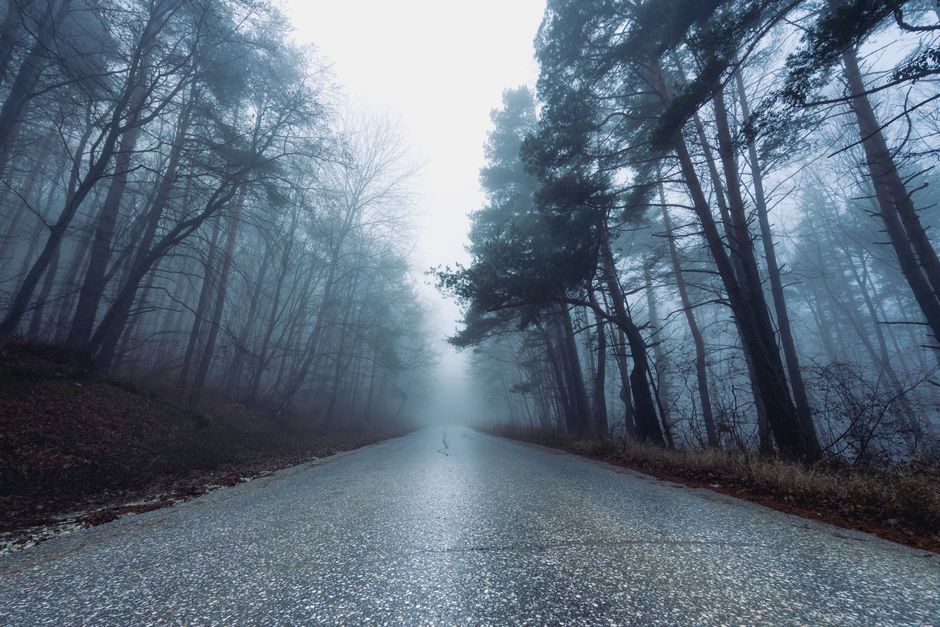
Why the Sudeten Mountains Work So Well for a Kamper Sudety Trip
The Sudeten range stretches roughly 300 kilometres along the Polish-Czech border, from the Zittau corner in the west to the Opawskie Mountains in the east. That distance alone gives you enough variety for two weeks of driving without repeating a single view. But the real reason a kamper Sudety trip works so well comes down to road infrastructure.
Unlike the Tatra Mountains, where most access roads funnel through bottlenecks and parking fees start at 30 PLN a day, the Sudeten foothills are full of quiet regional roads, unmarked forest tracks and small villages where a campervan fits perfectly. The altitude stays manageable too. The highest point, Śnieżka at 1,603 metres, is a hiking objective, not a driving one. The roads themselves rarely exceed 800 metres elevation, which means gradients you can handle in a fully loaded van without drama.
According to data from the Polish Tourism Organisation (POT), the Sudeten sub-region recorded about 4.2 million tourist overnight stays in 2024, roughly half the number registered in the Tatra area during the same period. For campervan travellers, that translates directly into less competition for parking, quieter trails and friendlier locals who are not yet tired of tourists asking for directions.
- Diverse landscapes: granite peaks, sandstone table mountains, river gorges, volcanic plugs
- Czech border crossings open 24 hours, letting you loop between countries freely
- Dense network of secondary roads suitable for campervans up to 3.5 tonnes
- No mandatory vignette for vehicles under 3.5 tonnes on Czech roads as of 2026
- Mild summers: average July high around 22°C at lower elevations
Key insight: The Sudeten range gives you mountain scenery without mountain crowds. That combination is increasingly rare in Central Europe.
Best Kamper Sudety Routes: From Karkonosze to Góry Stołowe
There is no single correct route. But there are a few logical loops that combine driving satisfaction, scenery and practical stopping points. Here is a framework for a 10-day trip starting and ending in Jelenia Góra, which is the natural gateway city for anyone arriving from the west or north.
The Western Loop: Karkonosze and Rudawy Janowickie
Start in Szklarska Poręba and drive south toward the Czech border via Jakuszyce. The road is smooth, the views open and the cross-border loop through Harrachov takes you back via Przełęcz Szklarska. Allow half a day for this section. Then turn east toward Rudawy Janowickie, a compact range of rocky tors that looks more like Dartmoor than any Polish mountain you have visited before. The village of Janowice Wielkie makes a good overnight stop, with flat parking near the church and a bakery open from 7am.
The Central Loop: Góry Sowie and Sowie Nest
The Owl Mountains (Góry Sowie) hide one of the strangest WWII sites in Europe: Project Riese, a network of underground tunnels carved by forced labour between 1943 and 1945. The main access is through Walim village. The parking area handles vehicles up to 8 metres without problems. From there, the road south toward Rzeczka opens onto a high ridge with forest tracks that demand careful line selection but nothing beyond a standard campervan with decent clearance.
The Eastern Loop: Góry Stołowe and Bystrzyckie
Góry Stołowe (Table Mountains) are genuinely unlike anything else in Poland. Flat-topped sandstone plateaus, narrow gorge labyrinths and the iconic Szczeliniec Wielki summit at 919 metres. The road from Kudowa-Zdrój to Karłów is the classic approach. Campervans over 2.5 metres width should take the slightly longer route via Radków to avoid the narrowest sections near the national park boundary.
Off-Road Tracks and Forest Roads Worth Exploring
This is where a kamper z oponami AT (napęd przedni) or high-clearance van pays for itself. The Sudeten forests are managed by the State Forests authority (Lasy Państwowe), and many service roads are accessible to public vehicles outside active logging periods. They are not signposted as tourist routes, but they show up on Mapy.cz and OsmAnd as gravel tracks.
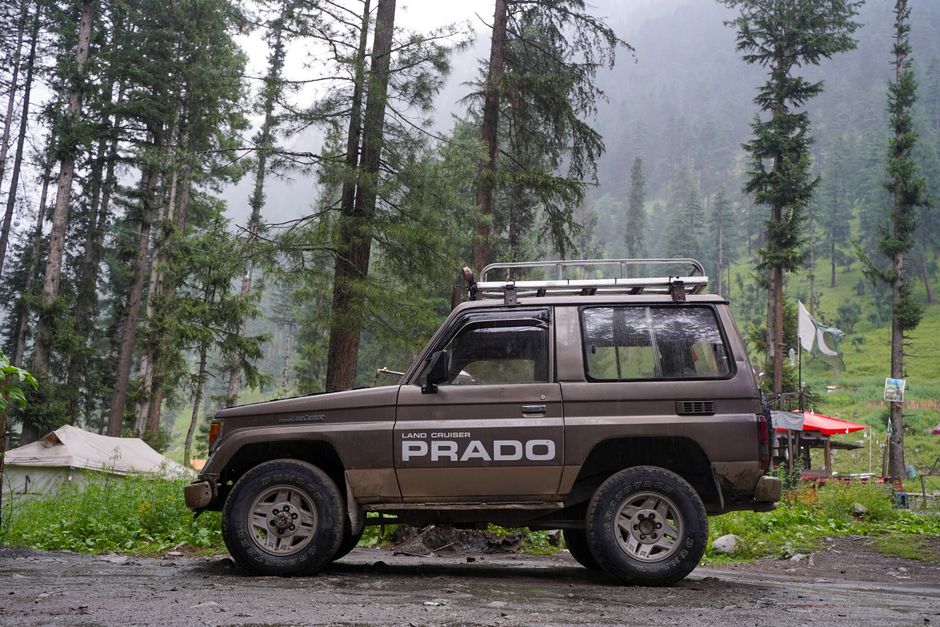
According to the Caravan Industry Association Europe (CIAE) 2025 report, demand for off-road capable campervans grew by 28% across Central and Eastern Europe between 2022 and 2025, driven largely by travellers wanting to avoid crowded campsite infrastructure. The Sudeten range is one of the primary destinations cited in that report for Polish off-road campervan itineraries.
Top Unpaved Sections to Consider
- Przełęcz Jugowska to Przełęcz Sokola: 14 km of forest road through Góry Sowie, loose gravel, some ruts after rain, clearance of 200mm recommended
- Wambierzyce to Radków via forest ridge: 9 km, mostly compacted gravel, passable in dry conditions by a standard high-top van
- Kłodzko Valley back roads: paved but narrow, linking small villages between Bystrzyca Kłodzka and Międzylesie, beautiful and almost empty
- Złote Góry approach from the Czech side: cross at Boboszów and use the Czech forest network from Zlate Hory south, then return north, a half-day loop
Always check current logging restrictions before committing to a forest track. The Lasy Państwowe regional office for Sudeten districts is based in Wrocław and publishes temporary road closures on their website. A satellite communicator or offline maps with recent data save significant frustration.
Key insight: ARB Tred Pro traction boards, which come standard in the Nomad Camper MAN TGE, handle the soft verge sections you encounter after the first stretch of forest road. You will not need them often, but when you do, you will be glad they are there.
Medieval Castles You Can Reach by Campervan
The Sudeten foothills have more castle ruins per square kilometre than almost anywhere else in Poland. Most were built between the 13th and 15th centuries by Bohemian and Silesian nobility, then abandoned, burned or deliberately demolished over the following centuries. What remains is usually atmospheric: crumbling towers above forest, worn stone staircases leading to views that have not changed in 500 years.
Grodno Castle (Zamek Grodno), near Zagórze Śląskie
One of the best-preserved Gothic castles in Lower Silesia. The parking area below the castle handles campervans without issue. Walk up takes 15 minutes on a marked path. The interior museum is small but well curated, and the view from the upper tower across the Bystrzyca reservoir justifies every step of the climb.
Bolków Castle (Zamek Bolków)
Visible from the main road between Jelenia Góra and Wałbrzych. Large campervan-friendly parking on the east side of town. The castle itself is substantial, with full exterior walls still standing and a tower you can climb. Allow 90 minutes for a proper visit.
Książ Castle (Zamek Książ), near Wałbrzych
The largest castle in Lower Silesia and the third largest in Poland. Connected to Project Riese via underground tunnels. Designated campervan parking exists on the approach road before the main gate. Busy on summer weekends, so arrive before 9am or after 4pm to avoid coach groups.
Chojnik Castle (Zamek Chojnik), above Sobieszów
A 14th-century ruin sitting on a granite outcrop at 627 metres, directly inside the Karkonosze National Park buffer zone. The walk from the Sobieszów parking area takes 40 minutes uphill. No vehicle access above the lower car park, but the lower car park handles a 7-metre campervan with roof rack.
Where to Sleep: Wild Camping, Motorhome Spots and Aire Stops
Overnight parking in the Sudeten region is easier than in the Tatras, but it still requires planning. True wild camping on public land is technically restricted in Poland, though tolerant enforcement in forest areas away from settlements is common provided you leave no trace. National park zones are a clear exception: no overnight stays outside designated areas.
The most practical overnight options for a kamper do wynajęcia in the Sudeten range fall into three categories.
- Designated motorhome stops (miejsca dla kamperów): Growing rapidly. Kudowa-Zdrój, Kłodzko, Szklarska Poręba and Lądek-Zdrój all have municipal or private motorhome areas with basic services. Check the interaktywna mapa miejsc dla kamperów for current locations and user reviews.
- Agritourism farms (agroturystyka): Many farms in the Sudeten foothills accept campervans overnight for 30-60 PLN, often including electricity. Ask at the gate or book via Noclegi.pl.
- Czech campsites just across the border: Czech campsite infrastructure is excellent and prices are lower than equivalent Polish sites. Harrachov, Trutnov and Zlate Hory all have sites open from May to September that accept campervans without advance booking on weekdays.
If you are travelling with a fully self-contained van, the autonomy calculation changes everything. The Nomad Camper MAN TGE carries 405Ah of LiFePO4 battery capacity, 500W of solar panels and a Truma D6E diesel heater. In practice, that means 2 to 3 nights completely off-grid without any services, which opens up parking spots that would be impractical in a van dependent on shore power.
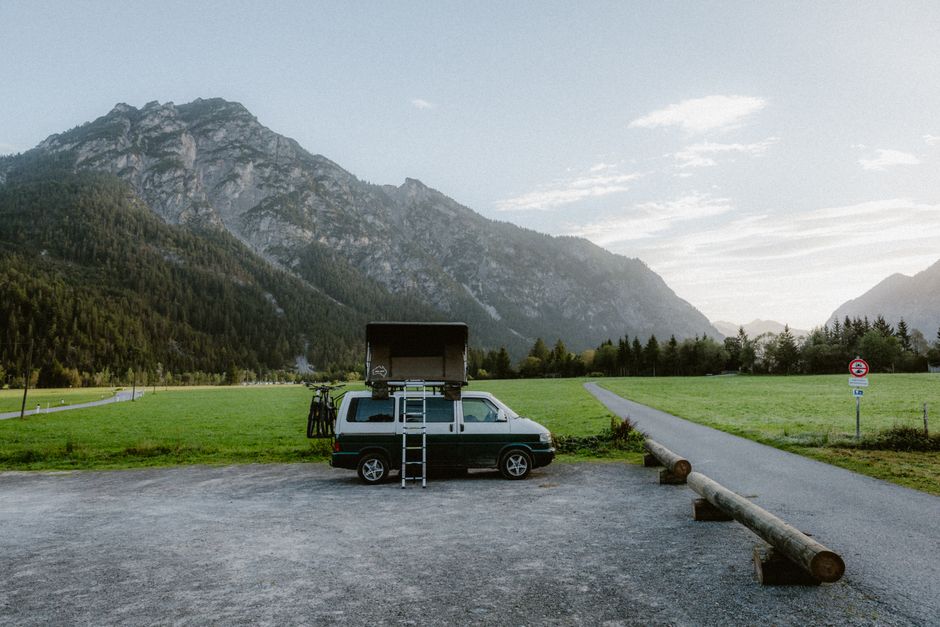
What Your Campervan Actually Needs for the Sudeten Range
Not every campervan is suited to the Sudeten range, especially if you want to use the forest road network and avoid spending every night on a paved campsite. Here is what actually matters for this type of trip.
Ground Clearance and Tyres
Most rental campervans in Poland are built on low-floor van bases with 170-180mm of ground clearance. That is fine for tarmac, but the first serious rut or rocky approach track will leave you beached. A camper terenowy built on a raised chassis, like the MAN TGE 3.140 platform used by Nomad Camper, has significantly more travel before anything touches the ground. Tyres matter too. All-season tyres on a 2-tonne camper on wet autumn gravel behave very differently from proper all-terrain rubber.
Energy Independence
Mountain weather is unpredictable. Two overcast days in Góry Sowie after a rainstorm is not unusual in September. A camper with only 100-200Ah of AGM batteries and no generator will be dark and cold by day three. The 405Ah LiFePO4 system with 500W solar and a Victron MultiPlus-II 3000W inverter means your fridge stays running, your Starlink stays online and the Dometic FreshLight 1400 keeps the van comfortable regardless of what the sky is doing outside.
Internet Connectivity
The Sudeten range has reasonable LTE coverage in valleys and near towns, but ridge roads and deep forest tracks drop to edge or nothing. For praca zdalna z kampera, that matters. Starlink Mini delivers 50-200 Mbps with a ping under 50ms from practically anywhere with a clear sky view, which includes most Sudeten ridge locations that have no LTE signal at all. According to Starlink's own coverage data for 2025, over 94% of rural locations in Lower Silesia have viable satellite uplink conditions.
Water and Waste Capacity
Fresh water fill points in the Sudeten region are not as frequent as on the Baltic coast or in the Mazurian lake district. Plan on filling a 100-litre fresh water tank every 3-4 days. Waste water cassettes and grey water tanks need emptying at motorhome service points, which the mapa kamperowa Polski marks with current open/closed status.
Frequently Asked Questions
Is a FWD campervan with AT tires necessary for a Sudeten Mountains trip?
For the main tourist routes, a standard high-clearance campervan is sufficient. If you want to explore the forest road network between Góry Sowie, Złote Góry and the Czech border areas, a kamper z oponami AT (napęd przedni) off road with proper clearance and all-terrain tyres makes a significant practical difference. You will not reach certain viewpoints and overnight spots without it.
How much does campervan rental cost for a Sudeten trip?
A fully equipped kamper wynajem cena at Nomad Camper starts from 500 PLN per day in the shoulder season and 600 PLN per day in high season (July-August). A 10-day Sudeten loop costs roughly 5,000-5,900 PLN in rental fees plus fuel. Budget an additional 100-150 PLN per day for fuel, food and site fees. That is significantly less than the equivalent hotel and restaurant spend for two people over the same period.
Can I take a rental campervan across the border into Czech Republic?
Yes. Cross-border travel into Czech Republic, Slovakia, Germany and Austria is included in the standard Nomad Camper rental agreement at no extra charge. You need to notify the rental company of planned border crossings at the time of booking. The Sudeten cross-border loops into the Krkonoše and Broumovsko areas are some of the best driving in the region.
When is the best time to visit the Sudeten Mountains by campervan?
Late May through June and September through early October offer the best combination of weather, empty roads and accessible forest tracks. July and August are busiest, particularly around Szklarska Poręba and Kudowa-Zdrój. Spring shoulder season also gives you flowering meadows and waterfalls running at full volume from snowmelt, which the summer months cannot match.
Plan Your Kamper Sudety Adventure
The Sudeten Mountains offer exactly what a campervan trip should: variety, freedom and the feeling that you are seeing something most travellers drive past on the motorway. Granite peaks above forest tracks, sandstone labyrinth gorges, Gothic castle ruins and a cross-border loop through Czech national park territory. All of it is reachable in a single two-week circuit from Jelenia Góra and back.
Three things to take away from this guide. First, the Sudeten range is genuinely underrated for campervans compared to better-known Polish mountain destinations. Second, forest road access rewards a high-clearance or kamper terenowy over a standard low-floor van. Third, energy and internet independence matter more here than on a coastal trip, because you will be off-grid more often and further from services.
Nomad Camper provides the wynajem kampera terenowego built specifically for this kind of trip: MAN TGE 3.140 with raised clearance, Starlink Mini, 405Ah LiFePO4 and all the equipment you need for two weeks in the mountains without compromising on comfort. Pick-up is in Szczecinek, and the Sudeten range is four hours south. Ready to go? Book your campervan online and start planning your Sudeten route today.