
If you've ever looked at a campervan rental and wondered whether your standard category B licence actually covers driving it, you're not alone. This is one of the most common questions people ask before booking a trip, and getting the answer wrong could mean a fine, an invalid insurance policy, or worse. In this guide, you'll learn exactly which licence category covers which vehicle weight, how Polish and EU regulations apply in 2026, what happens when a campervan exceeds 3,500 kg, and how the MAN TGE at Nomad Camper fits into the picture so you can plan your adventure without any legal surprises.
Why the Driving Licence Question Matters More Than You Think
Most people assume that because they can drive a large SUV, they can drive any campervan. That assumption works fine for smaller vans, but it falls apart the moment the vehicle tips over 3,500 kg of maximum authorised mass (MAM). At that point, a standard category B licence is no longer valid, and driving without the correct authorisation is treated the same as driving with no licence at all under Polish law.
The consequences are real. Police checks on motorways and border crossings have become more frequent since 2024, and rental companies are legally obliged to verify your licence before handing over the keys. If your licence does not cover the vehicle class, the rental simply will not happen. And if you somehow slip through and get stopped on the road, you face points, a fine, and a towed vehicle.
But here is the good news. Most modern campervan rentals in Poland, including the kamper terenowy at Nomad Camper, are built and registered to stay within the category B limit. That means the majority of travellers already hold the right licence. Understanding the rules still matters, because the details around payload, passengers, and towing can easily push you into a different category without you realising it.
- Driving without the correct licence invalidates your vehicle insurance automatically.
- Polish traffic law treats unlicensed driving as a criminal offence, not just an administrative one.
- Rental companies check licence categories at the time of vehicle handover, not at booking.
- EU driving licences are fully recognised in Poland, but the category rules are the same.
Licence Categories Explained: B, B+E, C1, and C1+E
European driving licences follow a unified category system, and Poland is no exception. Understanding what each category actually permits is the foundation of answering the prawo jazdy na kampera question correctly.
Category B
Category B is the standard car licence that most adults hold. In Poland and across the EU, it permits you to drive vehicles with a MAM of up to 3,500 kg, with up to eight passenger seats. You may also tow a trailer up to 750 kg. If the trailer is heavier, the combined weight of the vehicle and trailer must not exceed 3,500 kg, and you need the B+E extension above that.
Category B+E
This extension to category B allows you to tow heavier trailers. The towing vehicle itself must still be a category B vehicle (under 3,500 kg MAM), but there is no upper combined weight limit. If you plan to rent a campervan and tow a car or a heavy bike trailer behind it, B+E is what you need.
Category C1
Category C1 covers vehicles between 3,500 kg and 7,500 kg MAM. It is required for larger motorhomes that are registered above the B threshold. Getting a C1 licence requires an additional theory and practical test. In Poland, you must be at least 18 years old and hold a valid category B licence before applying.
Category C1+E
This combines C1 with a towing extension, allowing vehicles in the 3,500 to 7,500 kg range to tow trailers where the combined weight stays under 12,000 kg. Very few campervan travellers ever need this category.
Key information: If your campervan rental is registered with a MAM at or below 3,500 kg, your standard category B licence is all you need. This covers the vast majority of campervans available for rent in Poland in 2026.
Weight Limits and How Campervans Are Classified
The MAM printed in the vehicle registration document is the number that determines your licence requirement, not the vehicle's kerb weight or the payload. MAM is the maximum the vehicle is legally allowed to weigh when fully loaded, including fuel, water, passengers, luggage, and cargo.
This distinction matters because a campervan might have a kerb weight of 2,800 kg but a MAM of 3,500 kg. As long as the MAM does not exceed 3,500 kg, you drive it on a category B licence. But if you add a heavy bike carrier, fill the water tank completely, and load luggage beyond what the manufacturer allows, you may technically exceed the MAM even if the vehicle was registered under it. That is a separate infraction from the licence issue, but worth knowing.
How Manufacturers Handle the 3,500 kg Limit
Many campervan builders intentionally register their vehicles with a MAM of exactly 3,500 kg to keep them within the category B limit and make them accessible to the widest possible audience of renters. This is a common and completely legal practice. The trade-off is a reduced payload, which is the gap between kerb weight and MAM.
- Kerb weight: what the van weighs empty with a full fuel tank.
- MAM (DMC in Polish): the maximum legal loaded weight.
- Payload: MAM minus kerb weight. This is what you can actually carry.
- Always check the vehicle registration document, not just the manufacturer's website.
For a kamper wynajem where you plan to travel with two adults, luggage, food for two weeks, and a full water tank, the payload calculation becomes important. A van with a 400 kg payload sounds generous until you account for 90 kg of water, 60 kg of luggage, and two adults at an average of 80 kg each.
Driving a Campervan in Poland: Local Rules for 2026
Beyond the licence category, Poland has a few specific rules that campervan drivers should know before starting a podróż kamperem po Polsce.
Speed Limits for Vehicles Over 3,500 kg
If your campervan is registered above 3,500 kg MAM, lower speed limits apply automatically, even if you hold the correct C1 licence. On motorways, the limit drops from 140 km/h to 80 km/h. On expressways it is 80 km/h, and on single carriageways it is 70 km/h. Vehicles under 3,500 kg follow the standard car speed limits.
Parking and Wild Camping Rules
Poland does not have a national law specifically permitting or banning overnight parking in campervans on public roads. Local municipalities can set their own rules, and enforcement varies significantly by region. National parks and some nature reserves prohibit overnight vehicle parking entirely. Sticking to designated campsites, miejsca postoju kamperów (motorhome stop areas), or private land with permission is the safest approach for camping kamperem w Polsce.
Vignettes and Toll Roads
Poland's motorway toll system charges by vehicle category. Campervans registered under 3,500 kg pay the standard car rate. Those registered above 3,500 kg fall into a higher tariff category. The e-TOLL system in Poland is mandatory on toll roads, and you need to register your vehicle before entering a toll section.
- Vehicles under 3,500 kg: standard passenger car toll rates apply.
- Vehicles 3,500 to 12,000 kg: higher commercial vehicle rates apply.
- e-TOLL registration is mandatory regardless of vehicle category.
- Some roads in mountain areas have seasonal restrictions for vehicles over certain dimensions.
What Licence Do You Need for the Nomad Camper MAN TGE?
The kamper terenowy at Nomad Camper is built on a MAN TGE 3.140 base. It is registered with a MAM of 3,500 kg, which means a standard category B driving licence is all you need. There is no requirement for C1, B+E, or any additional category. This was a deliberate decision to keep the van accessible to anyone with a regular car licence, so the wynajem kampera process is as straightforward as possible.
The MAN TGE 3.140 has a 2.0 TDI engine producing 140 hp, which is enough to move a fully loaded van with confidence. The pneumatic rear suspension helps with stability when the van is at maximum payload, and the all-wheel-drive system with a rear diff lock means you can actually use the kamper z oponami AT (napęd przedni) capability on forest tracks, gravel roads, and light off-road terrain that most campervans cannot reach.
Practically speaking, the van handles more like a large SUV than a lorry. The turning circle is wide, and parking in standard spaces requires some planning, but anyone comfortable driving a large family estate or an MPV will adapt quickly. Nomad Camper provides a full vehicle handover at the Szczecinek base, including a walk-through of all dimensions and a practice manoeuvre session if you want one.
If you are planning a podróż kamperem po Europie, whether to Norway, Croatia, or Spain, your Polish or EU category B licence is valid in all EU member states and EEA countries. You do not need any additional documentation beyond a valid licence, the vehicle registration, and the rental insurance papers.
Check availability and dates at the wynajem kampera terenowego page before your trip.
Tips for First-Time Campervan Drivers
Having the right licence is step one. Actually driving a campervan confidently is a separate skill that takes a short adjustment period. Here are practical things that make the first day easier.
Before You Leave the Rental Base
- Walk around the van with the rental agent and note every existing mark on the condition report.
- Check the height of the van against any garage, carport, or underground car park you plan to use. The Nomad Camper MAN TGE is 2.5 metres tall at the roofline.
- Confirm the vehicle's exact MAM from the registration document and calculate your planned payload before loading.
- Test the mirrors. A campervan has no rear window view, so wing mirrors are everything.
On the Road
- Give yourself more braking distance than you would in a car. A loaded 3,500 kg van takes noticeably longer to stop.
- Wind sensitivity increases at motorway speeds. Keep both hands on the wheel when passing lorries.
- Before turning into a petrol station or car park, check the entrance height barrier. 2.5 metres clears most barriers, but not all.
- Use the GPS system or plan your route to avoid roads with low bridges or weight restrictions.
Setting Up Camp
The ARB Tred Pro traction boards stored on the Nomad Camper van are there for situations where soft ground, sand, or mud traps the rear wheels. Knowing how to deploy them before you need them saves a stressful hour in the dark. The Nomad Camper handover covers this, but you can also find a step-by-step guide on the blog.
For remote trips where internet w kamperze matters, the built-in Starlink Mini delivers 50 to 200 Mbps with a ping below 50ms, which is enough for video calls and praca zdalna z kampera even in areas with no mobile signal. You do not need to set anything up. It connects automatically when the van is stationary.
Ready to plan your route? Browse all options at the wypożyczalnia kamperów page.

Frequently Asked Questions
Can I drive a campervan with a standard category B licence in Poland?
Yes, as long as the campervan's MAM (maximum authorised mass) does not exceed 3,500 kg. The majority of campervans available for rent in Poland, including the Nomad Camper MAN TGE 3.140, are registered at exactly 3,500 kg and require only a category B licence. Always verify the MAM in the vehicle registration document before driving.
What is the minimum age for campervan rental in Poland?
Most rental companies in Poland, including Nomad Camper, require drivers to be at least 21 years old and to have held a valid category B licence for a minimum of two years. Some insurers set the minimum at 23. Check the specific rental terms before booking, as age conditions affect insurance coverage.
Do I need a special licence to tow a trailer behind a campervan?
If the campervan itself is a category B vehicle (MAM under 3,500 kg) and the trailer is under 750 kg, your standard B licence covers it. For trailers heavier than 750 kg, you need the B+E extension if the combined weight exceeds 3,500 kg. For trailers where the combined weight stays under 3,500 kg, B alone is sufficient. Check the combined MAM in both registration documents.
Is a UK driving licence valid for campervan rental in Poland after Brexit?
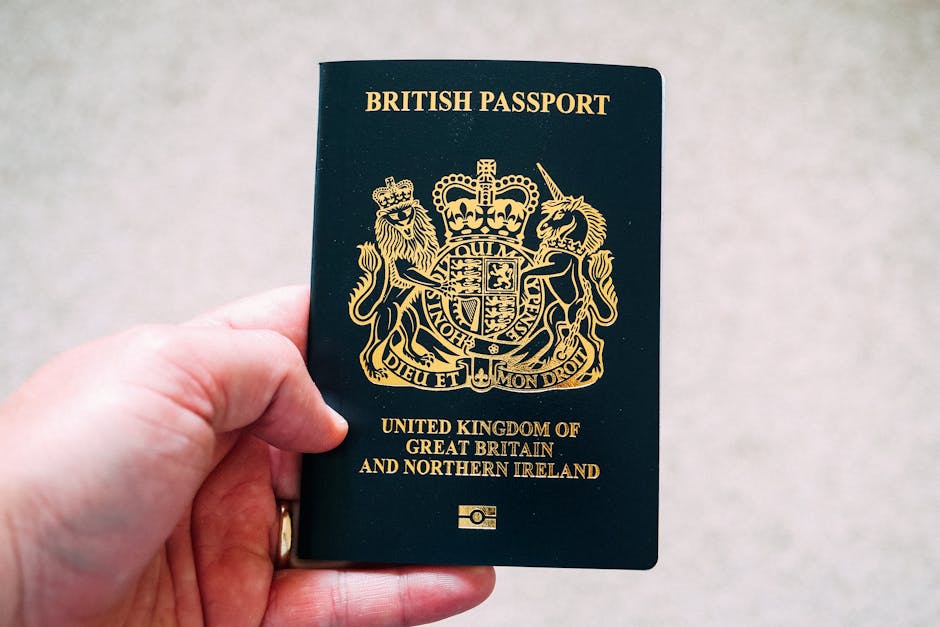
In 2026, UK driving licences are accepted for short-term stays in Poland under the 1968 Vienna Convention on Road Traffic. Most rental companies accept UK licences directly. However, some insurers require an International Driving Permit alongside the UK licence as a precaution. Contact the rental company before your trip to confirm their specific documentation requirements.
Plan Your Trip with the Right Licence in Hand
The answer to the prawo jazdy na kampera question is simpler than most people expect. For the vast majority of campervan rentals in Poland, a standard category B licence is everything you need. The key is to check the MAM in the registration document, understand the payload limits, and know the basic traffic rules that apply to your vehicle class.
Three things to remember: check the MAM before you drive, calculate your payload before you load, and verify your licence category matches the vehicle. Do those three things and the legal side of your trip is sorted before you even leave home.
The Nomad Camper MAN TGE is registered at 3,500 kg, requires only a category B licence, and comes fully equipped with Starlink internet, 405Ah of LiFePO4 battery storage, a fixed 140 by 200 cm bed, and genuine off-road capability. Whether you are planning a wynajem kampera na tydzień across the Bieszczady mountains or a longer kamper wynajem długoterminowy through Norway or Croatia, the van is ready when you are. Book your campervan rental online and we will have the keys waiting for you in Szczecinek.